November 9, 2026
The Everyday Ritual of Caring for Gold and Platinum
Fine jewelry lives close to us. A wedding band rests against the hand through ordinary mornings; a diamond pendant catches the light over a favorite sweater. With wear, these pieces gather traces of daily life—hand cream, soap, dust, and the subtle marks of contact.
Caring for them need not become an elaborate ritual. A few gentle habits can preserve their beauty while helping you notice when a piece needs professional attention. At UDE Collection, our Los Angeles atelier handcrafts jewelry in 14k and 18k gold and platinum, with particular attention to natural GIA-graded diamonds. Thoughtful care honors both the materials and the work that brings them together.
Begin With a Closer Look
Before cleaning, take a moment to examine your jewelry in good light. Look for a bent prong, a clasp that no longer closes securely, or a stone that appears tilted. A ring that suddenly catches on clothing may also deserve attention.
If you notice movement, hear a faint rattle, or suspect damage, set the piece aside rather than brushing or soaking it. Cleaning cannot correct a weakened setting, and continued wear may make a small issue more consequential.
The routine below is intended for sound gold or platinum jewelry set with untreated diamonds. Pieces with pearls, opals, emeralds, antique components, adhesives, or other delicate materials may require different care. If you are unsure about a stone or its treatment, ask a jeweler before cleaning at home.
A Gentle Clean, Step by Step
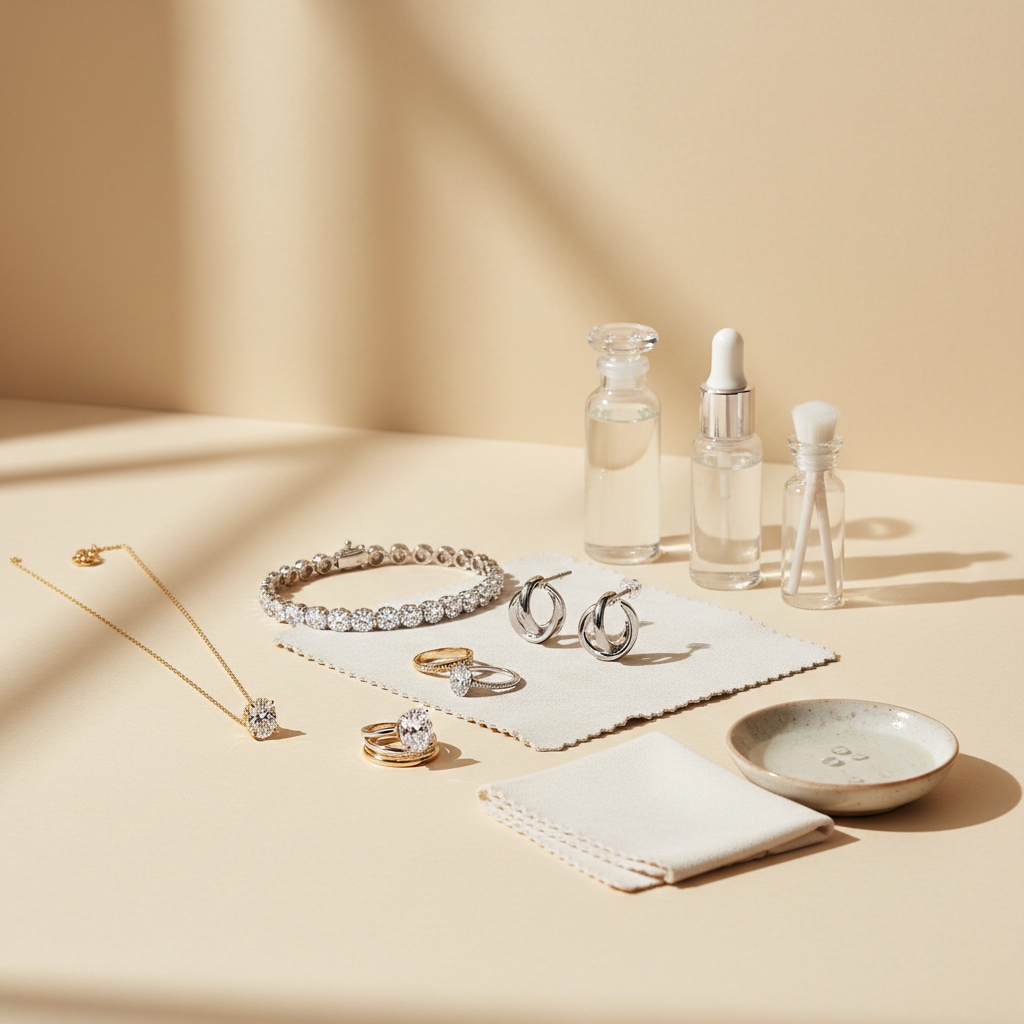
For most suitable pieces, lukewarm water, a little mild dish soap, and a very soft brush are enough. Choose a simple soap without abrasive ingredients or added moisturizers.
1. Prepare a small bowl. Mix a few drops of soap into lukewarm water. Work away from an open drain, ideally over a soft towel. 2. Let the piece soak briefly. About 10–15 minutes can help loosen everyday buildup. 3. Brush lightly. Use a clean, very soft toothbrush reserved for jewelry. Pay attention to the underside of the diamond, where oils collect, without forcing bristles beneath prongs or into tight settings. 4. Rinse in a separate bowl of clean water. Avoid holding jewelry directly over a sink drain. 5. Dry gently. Pat with a soft, lint-free cloth and allow the piece to dry fully before storing it.
A diamond’s brightness depends partly on how freely light can move through it. Removing the film beneath the stone often restores a clarity that surface wiping alone cannot achieve. Its GIA grading report documents its characteristics; it does not mean the diamond or its setting is immune to damage.
Understand the Metal’s Surface
Gold and platinum respond differently to daily wear, but both can scratch.
Gold jewelry is alloyed with other metals to make it suitable for wear. While 18k gold contains more gold than 14k, durability also depends on the alloy, construction, and design—not simply the karat designation. Neither should be cleaned with toothpaste, baking soda pastes, or abrasive household cleaners.
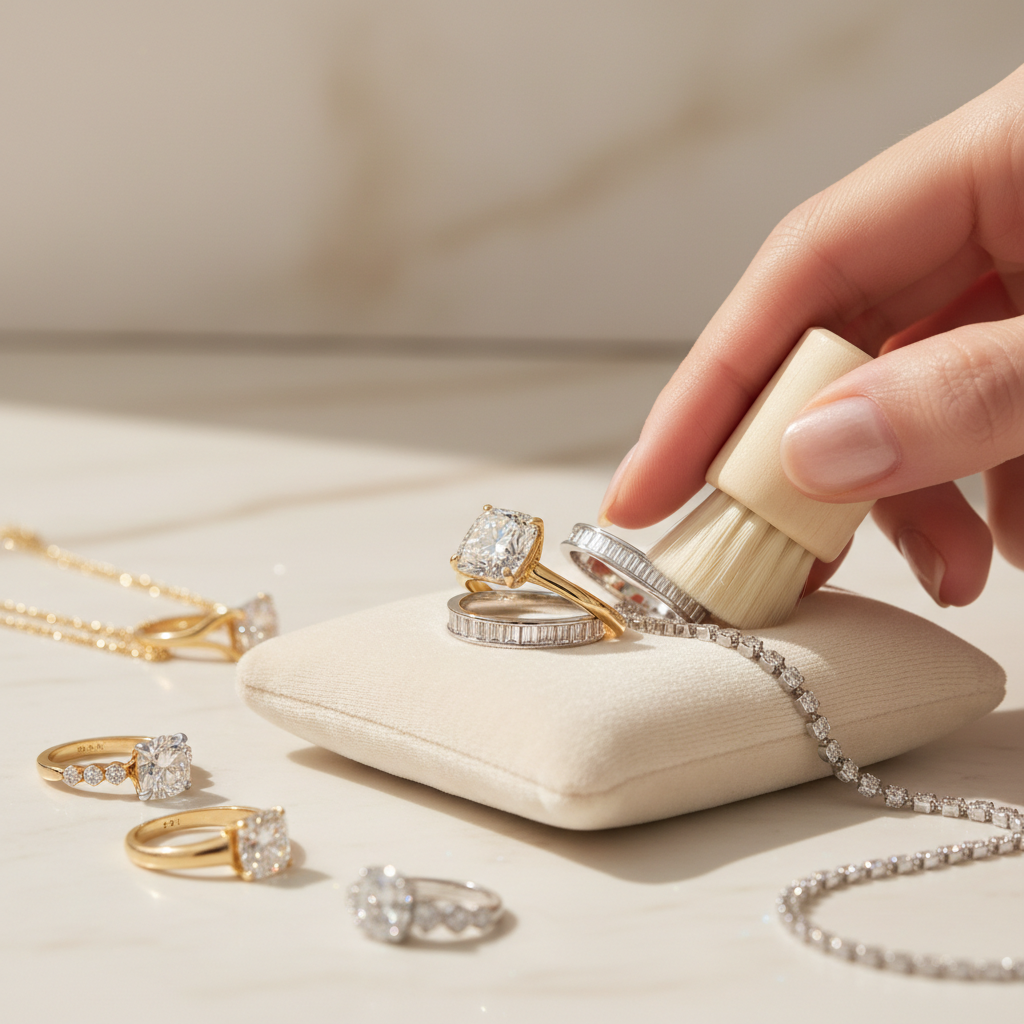
Platinum gradually develops a soft patina as tiny surface marks accumulate. Many people appreciate this quieter finish; others prefer a brighter polish. Either preference is personal. Professional refinishing can refresh the surface, but frequent polishing is unnecessary and should be approached thoughtfully.
White gold may have a rhodium finish that wears over time. Cleaning removes residue, but it will not restore worn plating. A jeweler can assess whether replating is appropriate.
Know When to Take Jewelry Off
Remove rings before lifting weights, gardening, handling abrasive materials, or doing work that places pressure on the setting. Diamonds are hard, but they can chip from a sharp impact, particularly along vulnerable edges.
Take jewelry off before swimming or using household cleaning products. Chlorine and bleach can damage gold alloys, and chemicals may affect other components or finishes. Apply lotions, sunscreen, and fragrance before putting jewelry on to reduce buildup.
Leave ultrasonic and steam cleaning to a professional who can first evaluate the stones and settings. These methods are not suitable for every piece, even when diamonds are present.
Give Each Piece Its Own Place
Store jewelry separately in soft-lined compartments or individual pouches. Diamonds can scratch other jewelry—and one another—when pieces rub together. Fasten necklaces before laying them separately to help prevent tangles.
Pair these home habits with periodic professional inspections, especially for rings worn daily. Every UDE Collection design can also be made with lab-grown diamonds on request; the same careful attention to its metal and setting remains essential.
For guidance specific to your piece, we warmly invite you to book an appointment with UDE Collection, Monday–Friday, 10am–6pm PST, by appointment.