November 2, 2026
Oval, Cushion, or Radiant: Finding the Shape That Feels Like You
Choosing a center stone often begins with a silhouette. An oval feels fluid and elongated; a cushion offers softly rounded edges; a radiant brings a more architectural outline. Yet shape alone tells only part of the story. Two natural diamonds with the same outline can handle light very differently—and feel entirely different on your hand.
At UDE Collection, our Los Angeles atelier, we approach this choice through proportion, light, and personal preference. The goal is not to find the shape with the longest list of advantages, but the individual diamond you enjoy looking at, day after day.
Oval: An Elongated, Fluid Silhouette
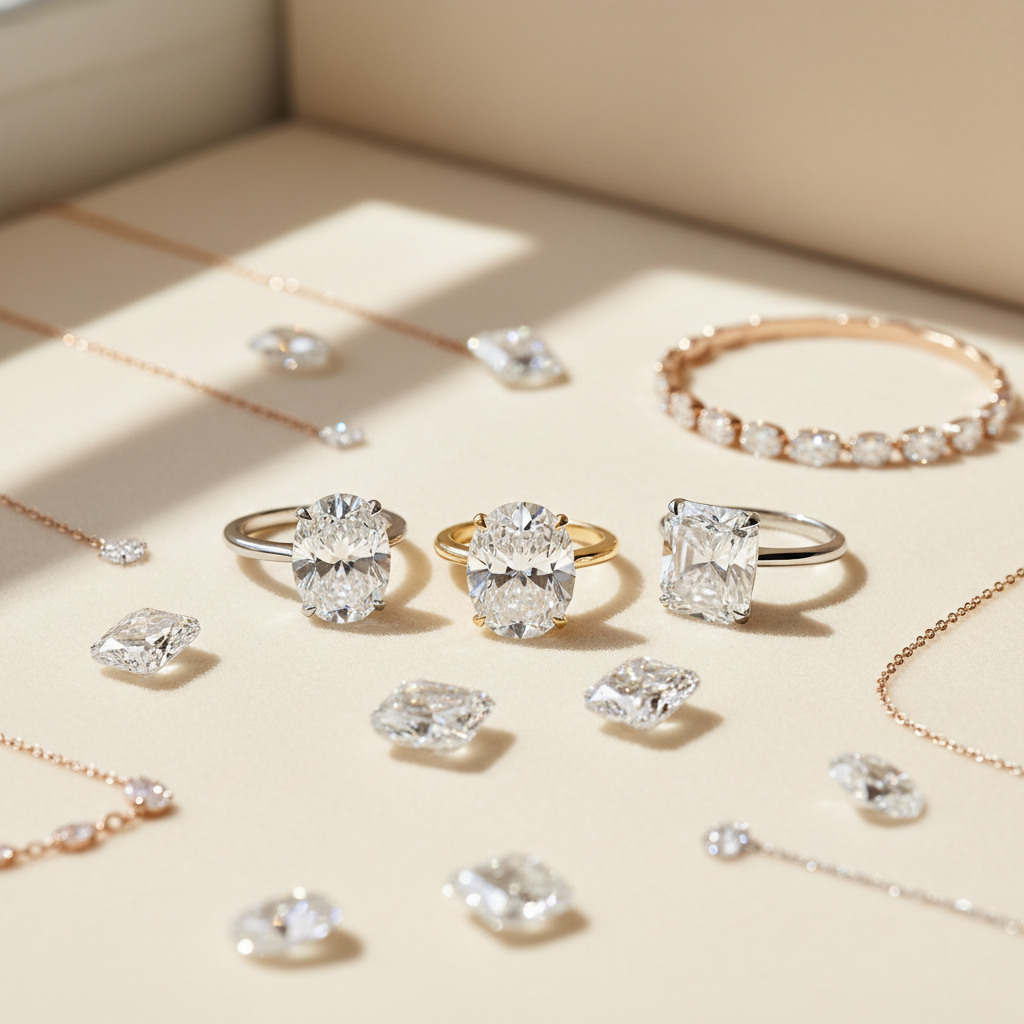
An oval combines a curved outline with the visual length of an elongated stone. It can create a graceful line along the finger, while its absence of sharp corners gives it an approachable softness.
Proportion matters. A longer, narrower oval has a distinctly different character from a fuller one. Neither is inherently better; the right balance depends on your hand, the band width, and whether you prefer a slender or more generous silhouette.
Look closely at the center of the diamond. Many ovals display a bow-tie effect: a darker area running across the middle, caused by the way the facets interact with light and the viewer’s position. Some contrast gives a diamond dimension, but a persistent dark band can interrupt its brightness. Move the stone gently and observe whether that central area comes alive or remains noticeably dark.
An oval is worth exploring if you are drawn to flowing lines and an elongated presence without angular edges.
Cushion: Soft Corners, Many Personalities
Cushion diamonds have a square or rectangular outline with rounded corners. Within that definition lies considerable variety. Some are nearly square and compact; others are elongated, with a softer rectangular profile.
Their light patterns vary just as much. Certain cushions show broad, clearly defined flashes, while others have smaller, more fragmented scintillation, often described as a crushed-ice appearance. These descriptions are useful starting points, not quality rankings. What matters is whether the pattern feels lively and appealing to you.
A cushion’s gentle outline can suggest an antique sensibility, but not every cushion is an antique-style cut. Facet arrangement, proportions, and setting all influence whether the finished ring feels historical, contemporary, or somewhere between.
Compare cushions in more than one lighting environment. Broad flashes may be especially noticeable as the stone moves, while finer sparkle can create a different texture. Pay attention to the entire face of the diamond rather than a single bright moment.
Radiant: Structure with Lively Sparkle
A radiant pairs a square or rectangular silhouette with clipped corners and a brilliant-style facet arrangement. It offers a more angular outline than an oval or cushion, without the long, open step facets associated with an emerald cut.
Radiants can appear crisp and geometric while maintaining a busy, sparkling interior. As with cushions, facet patterns differ: some stones offer more distinct flashes, while others have a finer, more scattered appearance.
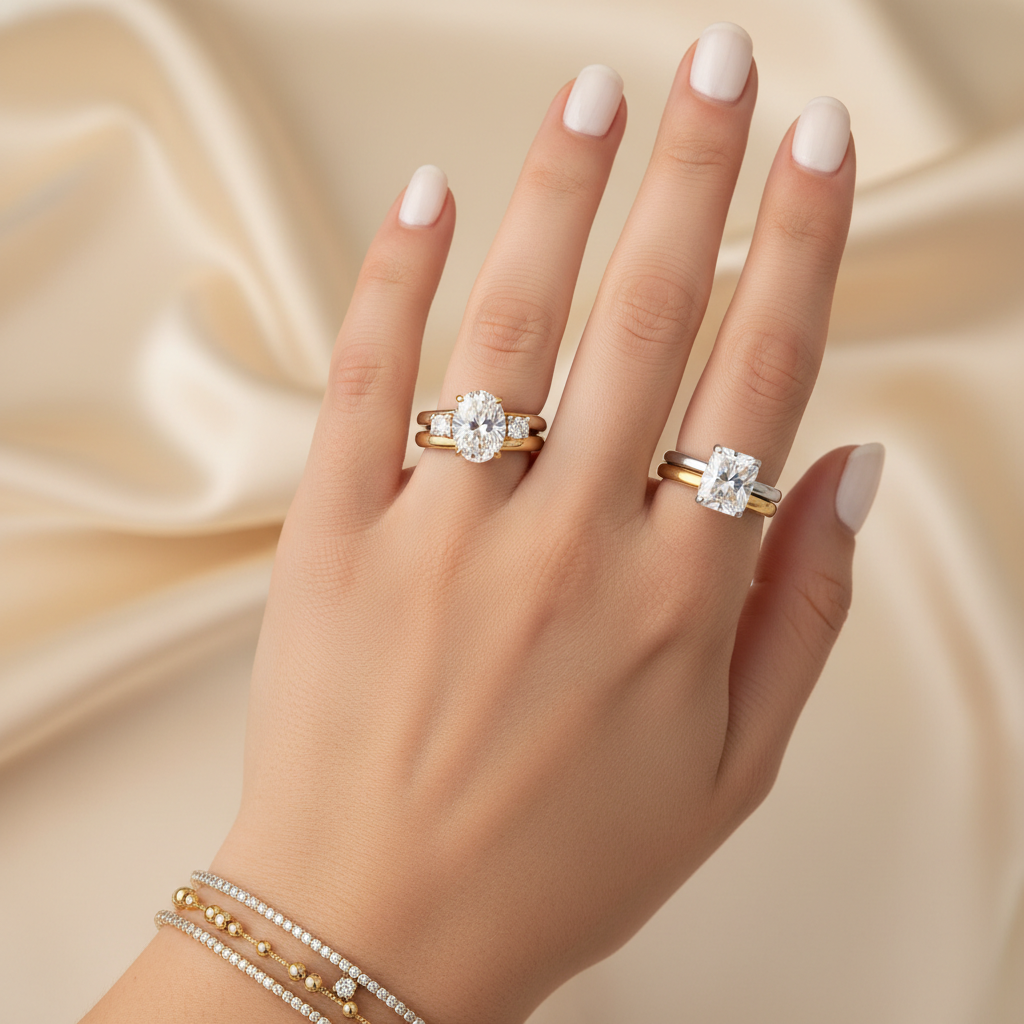
Look for pleasing brightness across the stone, checking for areas that seem consistently dark or watery as you move it. Also consider the clipped corners themselves. Their size affects the outline and the placement of the prongs, subtly changing the finished ring’s character.
A radiant may feel especially natural if you love clean lines but want a lively play of light within them.
Compare Diamonds, Not Just Shape Names
For natural GIA-graded diamonds, the report provides an essential foundation: carat weight, measurements, color, clarity, and other documented characteristics. GIA does not assign an overall cut grade to oval, cushion, or radiant diamonds, so the report cannot replace a careful visual comparison.
Start with three practical considerations:
- Measurements: Carat describes weight, not visible size. Compare length and width rather than assuming equal carat weights will look equally large.
- Color and clarity: Notice how body color and inclusions appear in the individual stone. Their visibility depends on more than the grade alone.
- Light performance: View diamonds in diffused daylight and ordinary indoor light, not only under concentrated spotlights.
Whenever possible, compare stones side by side and on your hand. Photographs can introduce a shape; movement reveals more of its personality.
Let the Setting Complete the Choice
A delicate band, substantial gold profile, or carefully placed side stones can shift the balance of any center diamond. At UDE Collection, we handcraft settings in 14k or 18k gold and platinum, considering the stone’s proportions alongside comfort, prong placement, and everyday wear. Every design can also be made with lab-grown diamonds on request.
There is no universal winner among oval, cushion, and radiant. The most meaningful choice is the one whose outline and light continue to hold your attention.
If you would like to explore these shapes in person, we invite you to book an appointment, Monday–Friday, 10am–6pm PST, by appointment.